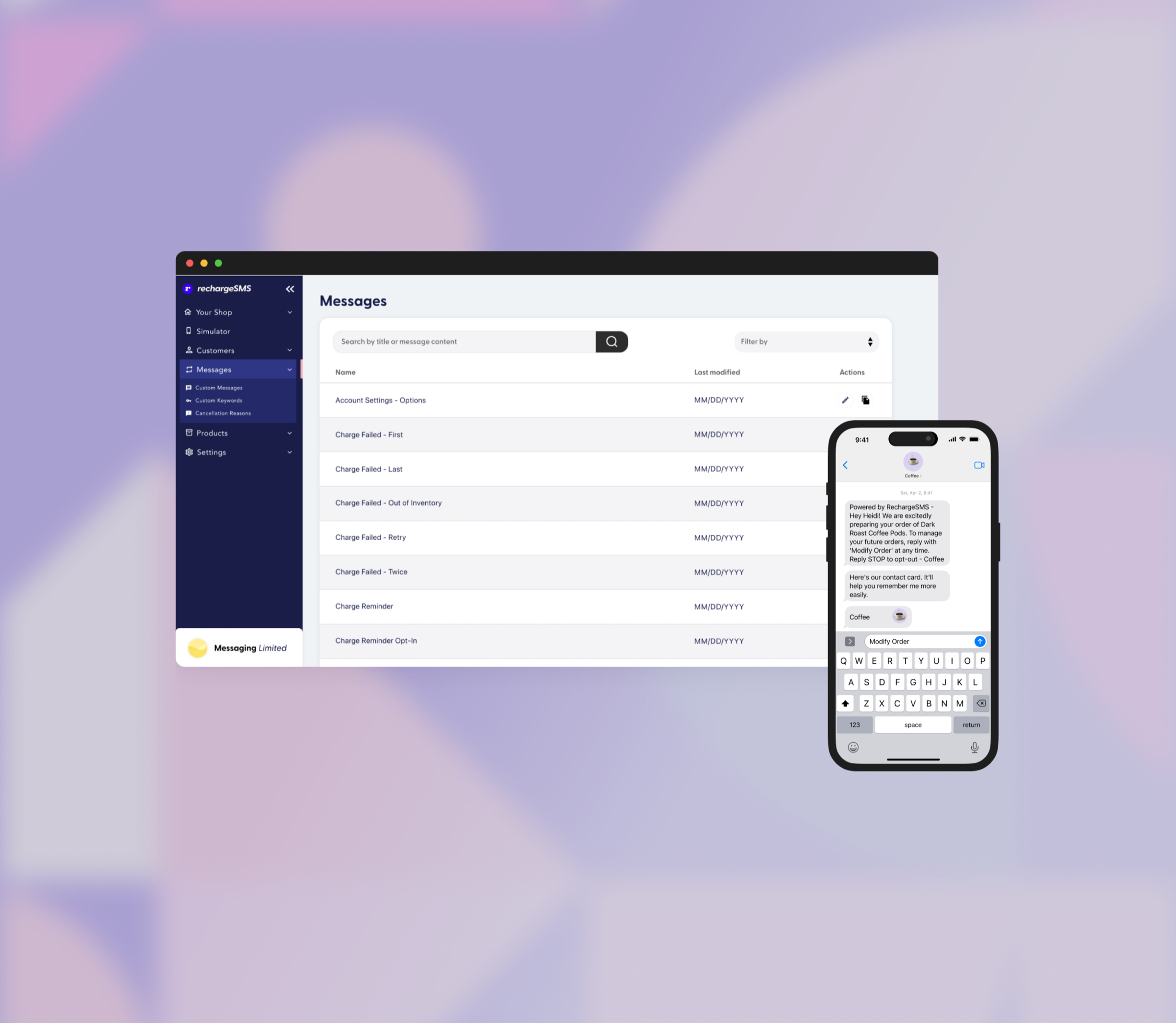
RechargeSMS merchant onboarding interface

RechargeSMS Onboarding

Doubled onboarding completion (33% to 66%) by redesigning the merchant setup flow based on funnel analysis.

Overview

RechargeSMS sends 6M+ text messages a month, letting subscribers manage their subscriptions with just a simple text. For merchants, higher SMS adoption directly improves customer LTV (lifetime value). So Recharge covered the cost of sending every message, because the economics worked for everyone: subscribers get easier management, merchants retain more customers, and Recharge earns more on every recurring transaction. That makes completing rSMS onboarding not only a UX metric, but a revenue lever.

With a free tool and a clear value proposition, the 10% adoption goal for 2022 should have been straightforward. But when I followed merchants through their journey from installation to activation, the funnel told a different story: only 33% were completing setup.

I owned the initiative to figure out why and redesign the experience to close that gap.
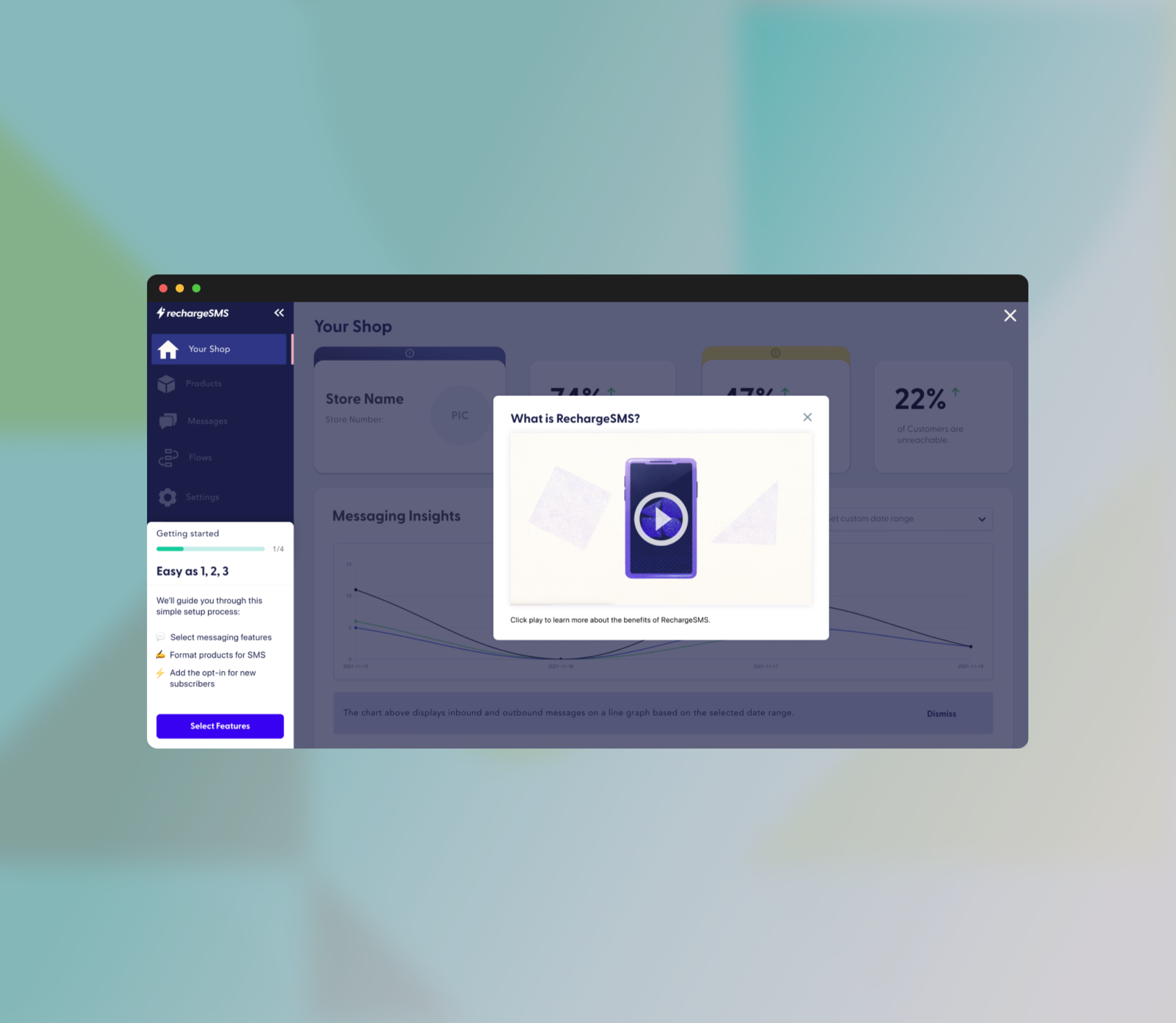
RechargeSMS onboarding welcome screen in 3D

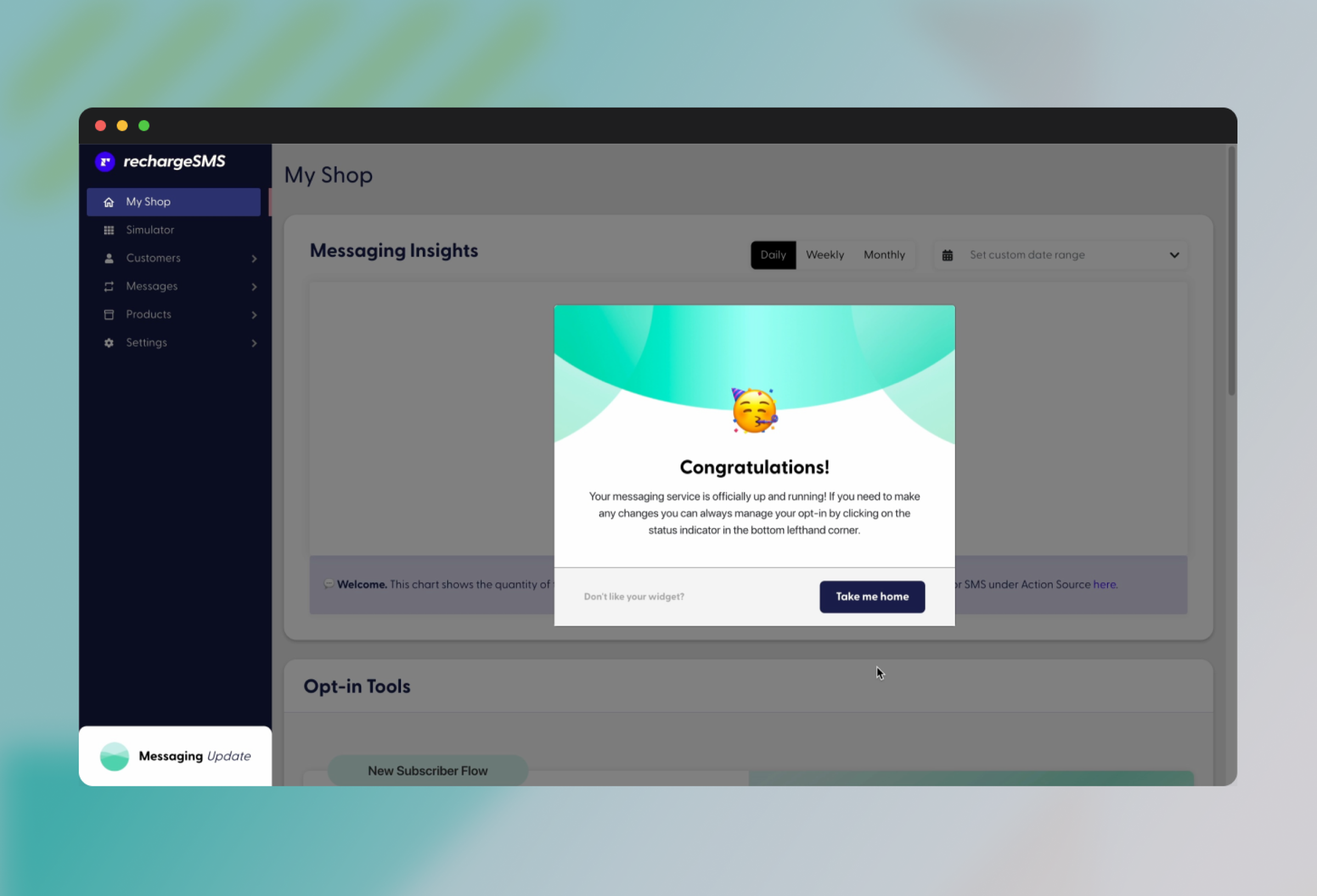
Welcoming new users during onboarding and setting expectations for what's next.

Discovery

Following the data

We didn't have a formal analytics funnel for onboarding. So I pulled the data myself, writing SQL queries against the database to piece together where merchants were dropping off. I could see what state each merchant was in: whether they'd completed onboarding, whether they'd ever enabled the tool, if it was currently on or off, and how many messages they'd sent. That gave me a rough but usable picture of the drop-off points.

The data told me where merchants were falling out, but not why. Support ticket analysis added another layer: merchants weren't confused by the product. They were hesitant.

Discovery

Hearing it from merchants

Conversations with merchants confirmed what the data hinted at. Three patterns kept coming up:

🫣 Fear of mistakes

Merchants worried that incorrect settings would send the wrong messages to their customers. With no undo or preview, the stakes felt high.

🌗 Incomplete exploration

Many started onboarding but didn't visit most pages. They weren't lost. They just didn't have enough motivation to keep going.

🎨 Branding perfectionism

Some merchants delayed activation entirely to customize message templates first, treating onboarding like a one-shot commitment.

Discovery

Connecting the dots

Mapping the full onboarding journey was eye-opening as it revealed that the flow was too long, which amplified anxiety. And the UI gave merchants nothing back: no progress indicators, no success states, no signal that mistakes could be corrected.

💡 Onboarding wasn't a complexity problem. Rather, it was a confidence problem.

Shortening the flow would reduce exposure to anxiety, and adding feedback loops would give merchants the assurance to keep going. Both levers needed to work together.

Solution

Scoping the MVP

With the confidence reframe in hand, I worked with product design to explore solutions. We had to be ruthless about scope and hone in on the essentials merchants needed to complete in order to send SMS.

We mapped every step in the existing flow against one filter: does the product break without this? That cut the list quickly.

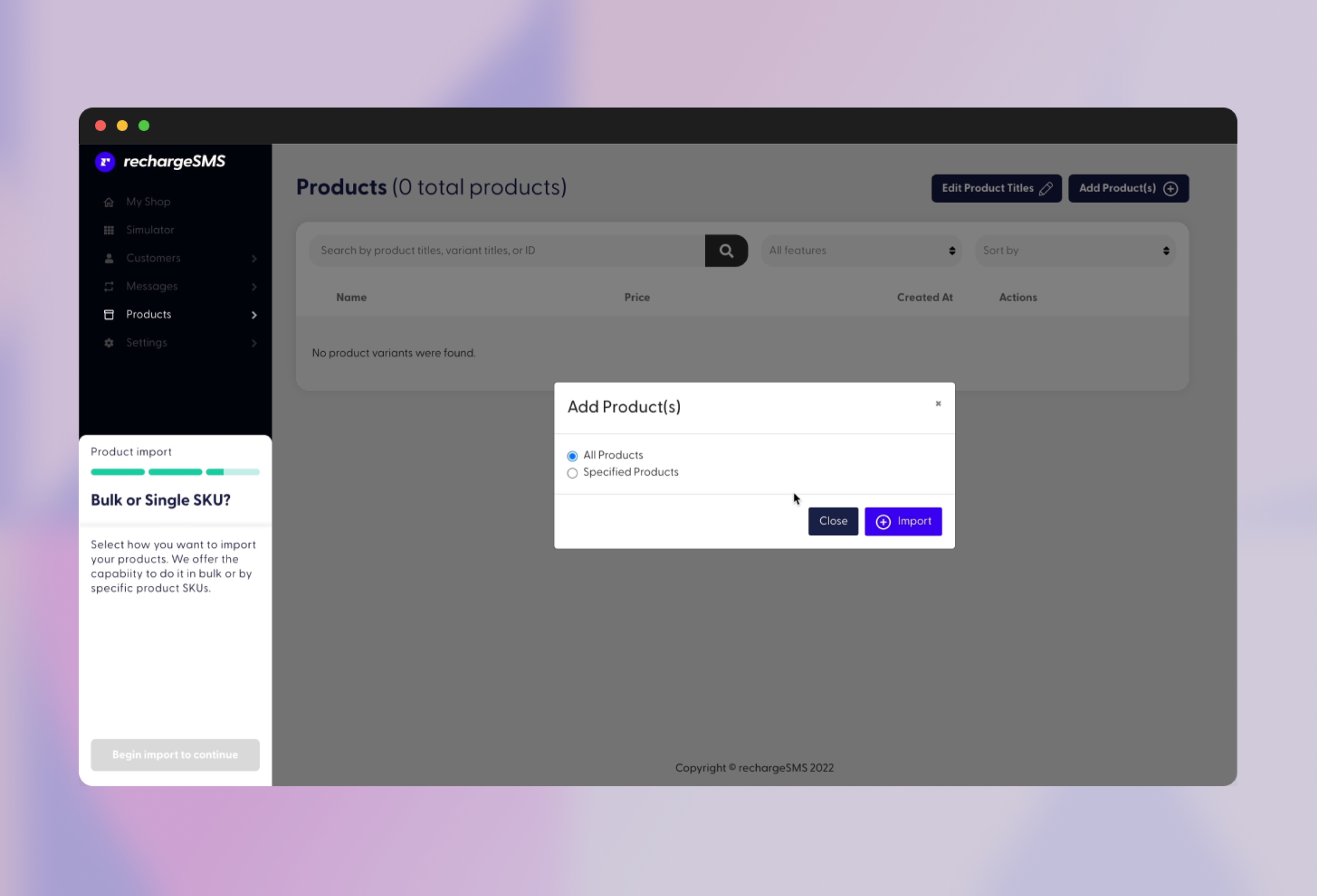
  • Store import stayed, but we rearchitected the timing. Instead of making merchants wait, we kicked off the Shopify product import in the background while they started onboarding. By the time they reached the import page, it was already done or in progress.
  • ✂️ Swap Groups and other enhancement features got deferred. They make the product better and promote upsells, but they aren't required to launch.
  • ✂️ A Shopify configuration step got removed entirely. It required merchants to leave the app mid-onboarding, go into their Shopify settings, and configure opt-in. It was one of the biggest drop-off points in the funnel, so we found a way to eliminate it from the flow.
  • ✂️ Broken tooltips got scrapped instead of fixed. They were more difficult for engineering to retain, and fixing them meant investing in a pattern we didn't want to keep.

Solution

The onboarding buddy

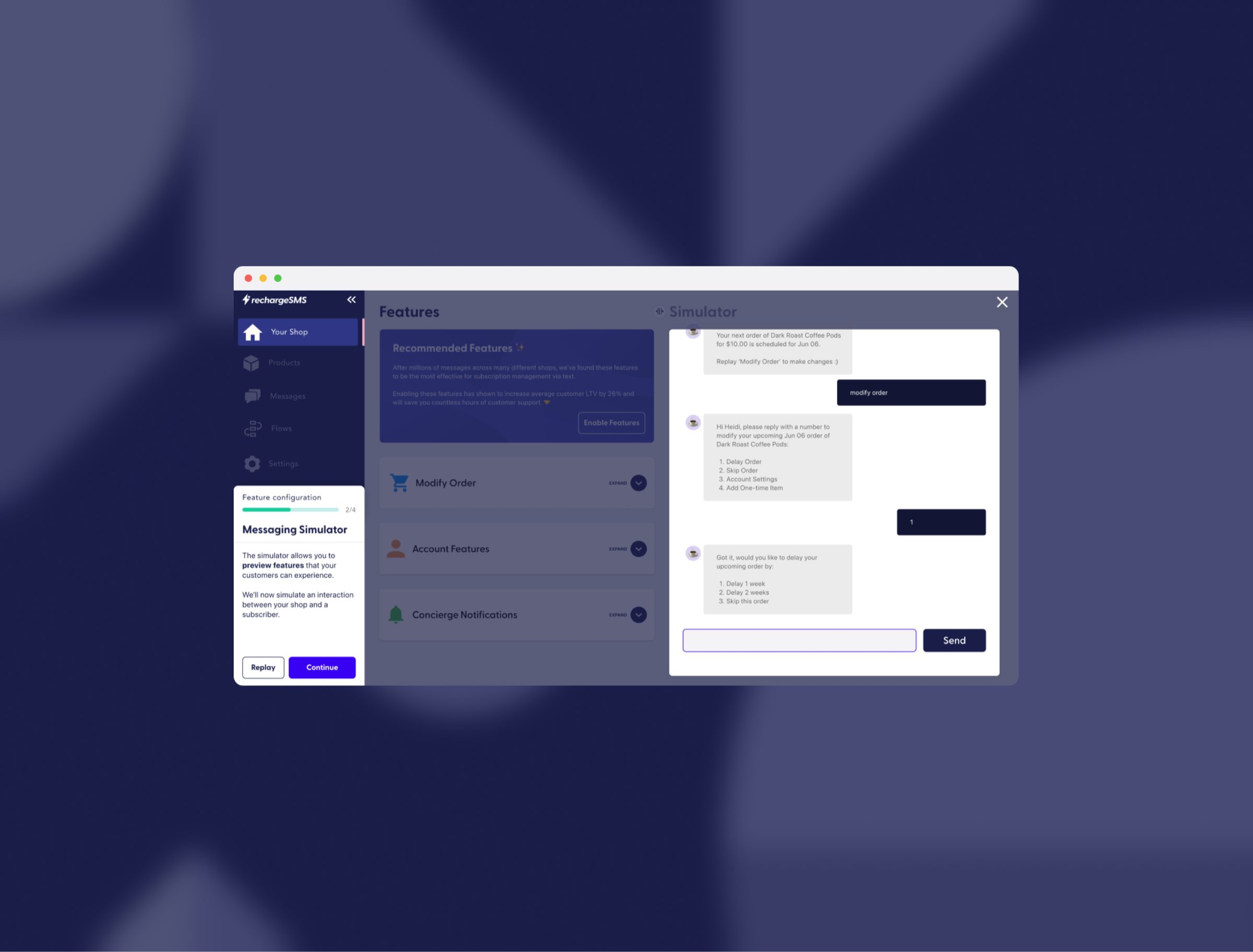
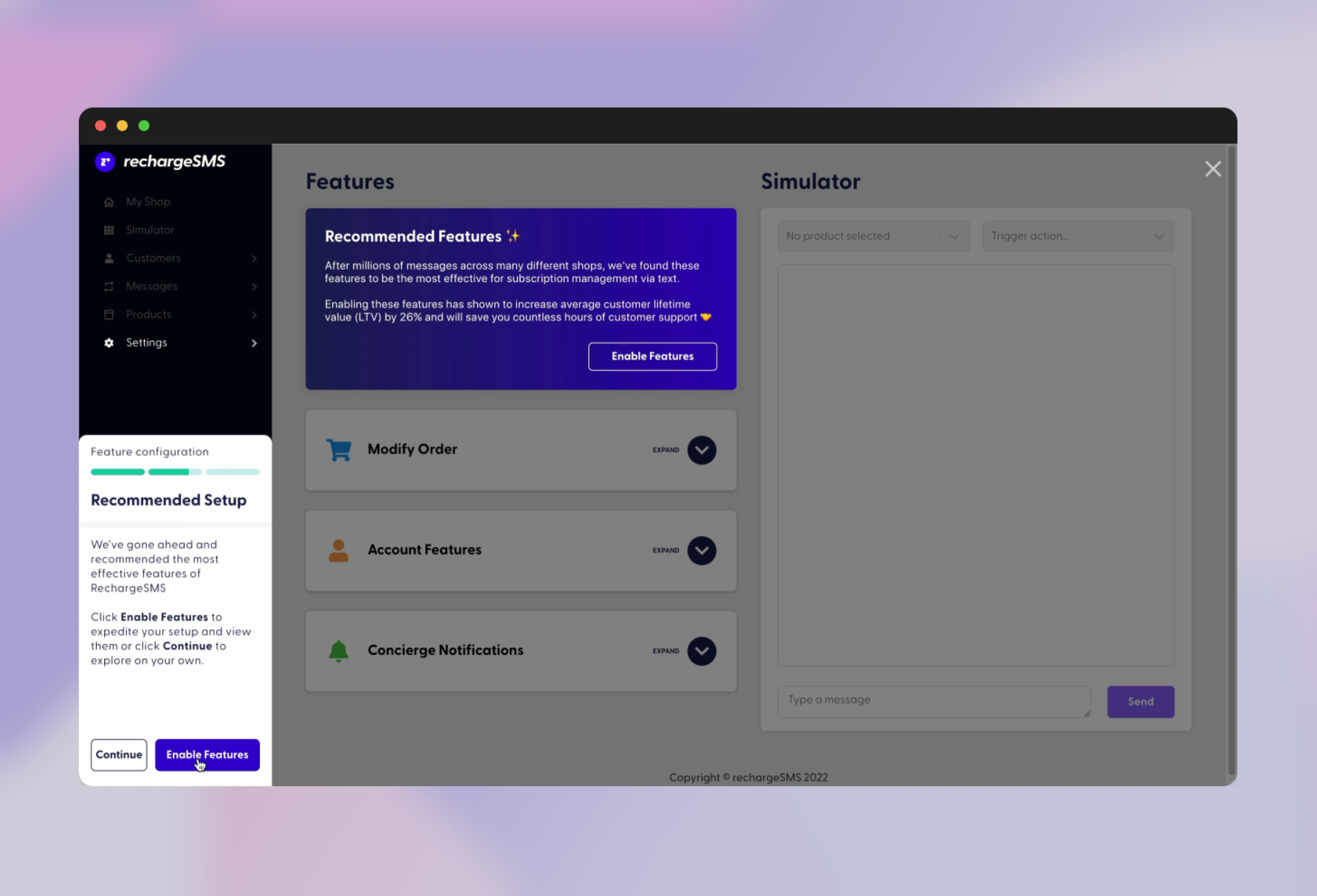
Instead of patching the tooltip system, we introduced something new: an onboarding buddy UI anchored in the bottom left corner. It solved multiple problems at once.

It gave merchants a persistent sense of where they were in the flow. It housed the progress indicators and success states we'd identified as missing. And it was sleek enough to become a foundation for a broader notification pattern we wanted to build across the product.

The four design themes

💬 Feedback

Encouraging CTAs, progress bars, and success states to report completion.

✂️ Essentials

Shorter onboarding, focused only on what's needed for activation.

🔀 Rearrange

Strategically place a moment that demonstrates the value proposition as motivation to keep going.

🤖 Onboarding buddy

A new, scalable UI for app status and activation state.

Process

Driving the build

Because onboarding touches every part of the product experience, this wasn't a project I could run in a silo. I wrote the PRD, defined the user stories and acceptance criteria, and prioritized the tickets. But the real work was keeping five teams aligned: design, engineering, product marketing, support, and data analytics.

The data side was scrappy from the start (I'd already been pulling numbers directly from the database during discovery), and we started building out better instrumentation alongside the project.

I partnered closely with product design to iterate on solutions, worked with engineering to scope feasibility and extensibility, and looped in product marketing and support so the rollout wouldn't catch anyone off guard. Then I ran QA acceptance testing before launch.

RechargeSMS onboarding flow showing streamlined setup experience

Outcome

Results

2x

Onboarding completion (33% → 66%)

66%

Peak completion rate

📈

Merchant adoption trending ahead of the 10% annual goal

The end product was a streamlined, focused onboarding experience. The onboarding buddy UI gave merchants a persistent guide through activation, housing progress indicators and feedback states in a dedicated space. It also established a new notification pattern that the team could extend across the product.

RechargeSMS redesigned onboarding with onboarding buddy UI
The redesigned onboarding experience with the \"onboarding buddy\" guiding users through activation.

Reflection

What I learned

This was my first significant project that I oversaw as a PM from start to finish, and I scoped the entire redesign as one large epic. We shipped it all at once. It worked, but looking back, I would have broken the work into smaller releases so we could ship enhancements incrementally and learn from each one. That's a lesson I've carried into every project since.

Other projects